
Ditch the Dinner Date: The Neurobiology and Power of Experience-Led Intimacy

For decades, the traditional dinner date has been the unchallenged king of romance, especially around Valentine’s Day. We get dressed up, sit across from each other in an expensive, brightly lit restaurant, and try to perform our best selves. But more and more, couples and singles are ditching these rigid setups.
Instead, there is a massive rise in experience-led dates. People are opting for adrenaline-fueled adventures like Go-Karting, Escape Rooms, and Paddleboarding, or slow, tactile connections like pottery making, cookery classes, candle making, and stargazing.
Even data now suggests that people are coming away from dating apps entirely, wanting to meet in real life straight away through an shared activity. The trends are changing because people want experiences aligned with their real personalities and how they actually choose to spend their time.
As a somatic sex and relationship coach, I am thrilled by this shift. Sitting across a table often breeds performative pressure and awkward silences. Moving together, however, completely rewires your brain for connection. Here is the neurological and emotional reality of why experience-led dates build an unshakeable bond.
The Psychological Needs Fulfilled by Action
When you choose an experience over a menu, you are fulfilling deep emotional and neurological needs that a restaurant simply cannot touch:
1. The Chemistry of Co-Regulation
Doing an activity triggers a direct release of dopamine and serotonin, your primary feel-good and calming hormones, which naturally strengthen relationship foundations. Because you are activating the brain through movement, you find yourselves bonding in different ways, holding hands, and simply being more present in each other's physical space.
2. Shared Accomplishments and Reward Hits
When you complete a task together, like successfully breaking out of an Escape Room, your brain releases a massive hit of dopamine alongside oxytocin (the love and trust hormone). This creates a genuine sense of shared achievement, happiness, and excitement that you can both celebrate when the date finishes.
3. Neural Coupling (The Mind Sync)
There is a fascinating brain reward called neural coupling. When you and a partner are actively completing a task together, your brains mirror each other and sync up. This drops you onto the exact same wavelength. It’s the reason why, after a shared experience, you might suddenly find yourselves finishing each other's sentences.
4. Calming the Amygdala
The amygdala is your brain's primitive fear and anxiety center. When you are engaged in a fun, collaborative task, you are forced to trust each other 100%. This keeps the amygdala completely calm, turning down your social anxiety and allowing you to communicate and solve problems easily.
Why Intimate Experiences (Spas and Saunas) Lower the Pressure
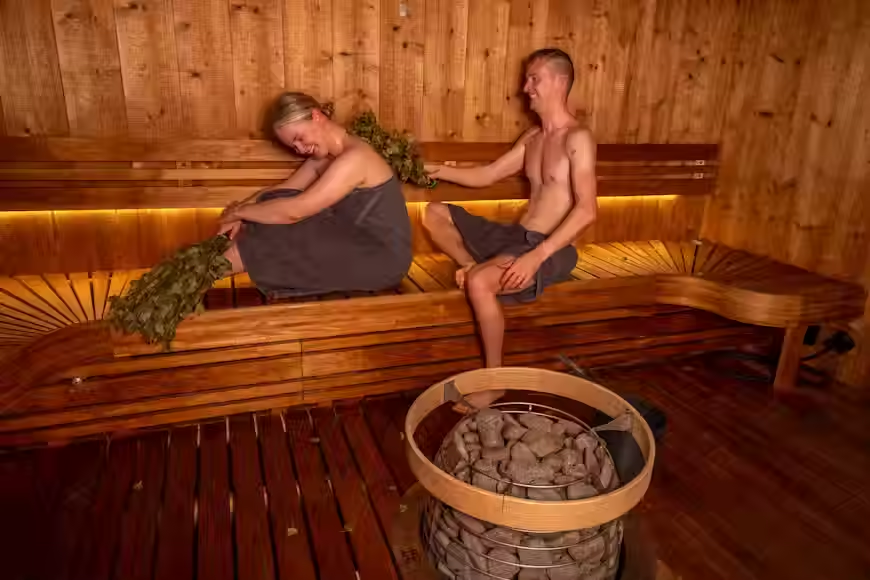
For couples looking to reconnect without the heavy pressure to perform, spaces like a spa, sauna, steam room, or hydro-pool are deeply appealing.
These environments are specifically designed to eliminate daily digital distractions and lower cortisol (the stress hormone) across your entire system. When cortisol drops, dopamine and serotonin take over, bringing back feelings of core comfort, love, and understanding.
In the soft environment of a low-lit sauna or steam room, a beautiful somatic shift happens entirely on its own:
Removal of Visual Pressure: The low lighting instantly removes the pressure to look perfect, allowing you to relax into your own skin.
Comfortable Silence: Silences completely stop feeling awkward; instead, they transform into deeply comforting moments of shared presence.
Heart-Rate Synchronisation: Your bodies physically connect in the quiet, warm space, actively syncing your heart rates and dropping your nervous systems into absolute peace.
This profound physical relaxation makes both partners feel secure enough to talk through lingering conflicts or gently work through any negative emotions that have arisen lately. It is a safe, soft harbor to rebuild a connection that has felt stagnant.
"We" Instead of "I": Breaking the Social Media Trap
Traditional, performative dates are often heavily wrapped up in social media status, taking the perfect picture of the food or the outfits to show off to the world. Experience-led dates strip that ego away. They invite you to step directly out of your comfort zone and be completely vulnerable, making the date about sharing raw, intimate thoughts.
Whether you are navigating a tree-top ropes course, messing up a clay pot, or burning something in a cooking class, these dates instantly build a solid foundation of teamwork. It changes the dynamic from an individualistic "I" to a collaborative "We."
The power of physical touch during these activities sends constant, calming safety signals to the primitive brain. By removing the stiff formatting of a dinner table, it allows people to be completely open, honest, raw, and real with each other, letting genuine closeness happen entirely naturally.
Let's Open the Conversation
Have you and your partner swapped the traditional Valentine's Day dinner for an experience-led date before? Did you notice a shift in how safe, open, and turned-on you felt afterward?
Let’s talk about it in the comments below.
If your dates have started to feel like a performative chore and you want to learn how to use somatic principles to bring the raw fun, trust, and intimacy back into your connection, reach out today to book a 1:1 coaching session.


Comments